
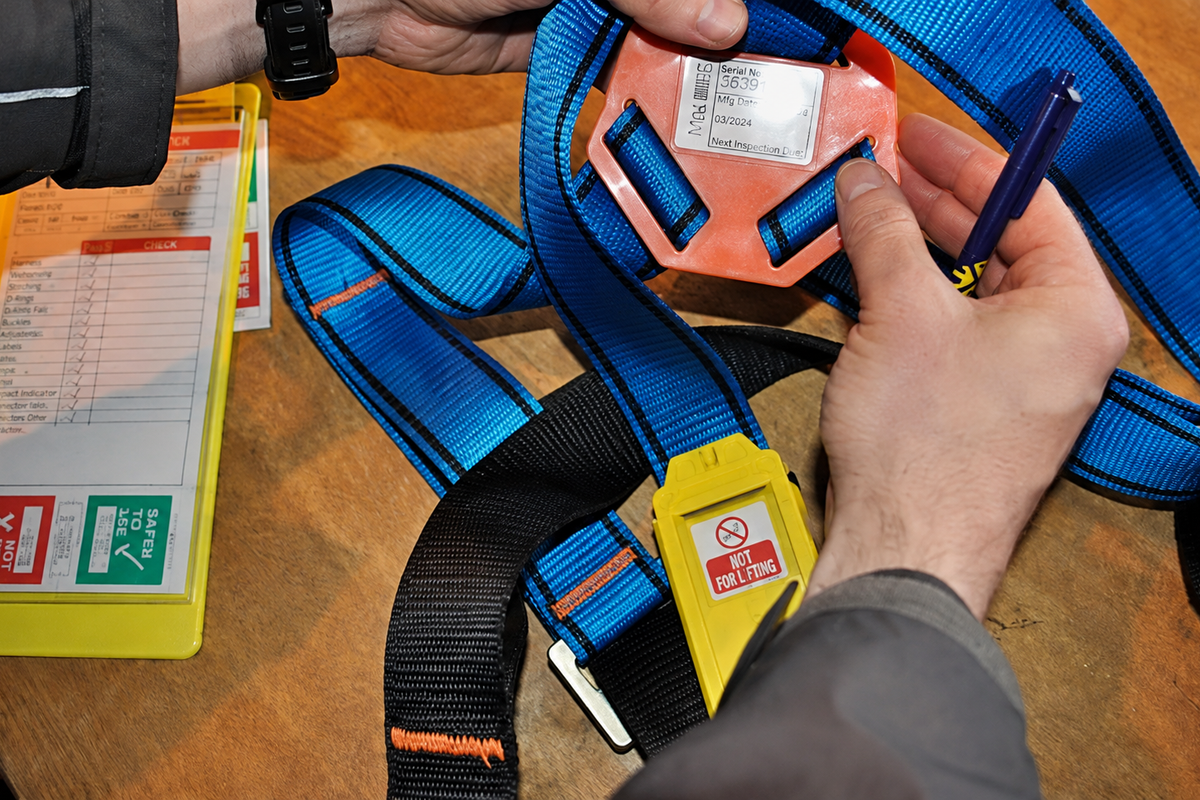
Inspecting fall protection in practice
WHAT DOES THIS FALL PROTECTION INSPECTION TRAINING COVER?
In this training, we focus on the practical skills for inspecting PPE for work at height.
This training is not only aimed at External Services for Technical Inspection (EDTC).
The practical application is also a must for prevention advisers or staff responsible for the internal inspection of personal protective equipment.
After a theoretical introduction (30%), we move on to inspection and testing in practice.
Using various brand-independent examples, we learn to inspect and check the different PPE for work at height.
- Legal documents
- Impact force, breaking strength and safe working value
- Material types (textile, plastic and metal) and properties
- Standards
- Identification
- Service life
- Recognising types of PPE for work at height according to the protection method
- Knowing the correct operation of the PPE for work at height
- Maintenance
- Application areas of PPE for work at height (tree care, industry, fire brigade, confined spaces, )
- Inspection criteria
Visual inspection of:
- Helmets
- Harnesses, lanyards and retractable fall arresters
- Ropes
- Descenders
- Mobile fall arrester on rope/cable/rail
- Rescue devices
- Carabiners, rope clamps and pulleys
- Fixed and mobile anchor points
- Tripods
NO WORDS, BUT ACTIONS!
- Theoretical introduction (30%) with plenty of practical exercises (70%)
- Continuous assessment and competence test
- Every participant who passes receives the official certificate of participation
WHAT DOES THE LAW SAY?
Every fall protection device must be inspected at least once a year or after a fall by a competent person.
In Belgium, this is done by an independent body (EDTC)
In the Netherlands and France, by a person competent for this purpose and, where applicable, authorised by the manufacturer.
Harnesses, lanyards, fall arresters and other non-maintainable/repairable attachment and fall protection equipment must always be condemned after a fall for further use.
Frequently asked questions
Who is the fall protection inspection training for?
For External Services for Technical Inspection (EDTC), prevention advisers and staff responsible for the internal inspection of PPE for work at height.
How often must fall protection be inspected?
At least once a year or after a fall, by a competent person (in Belgium an independent body, EDTC).
What happens after a fall?
Harnesses, lanyards, fall arresters and other non-repairable equipment must always be condemned after a fall.